
Pool Heat Pump vs Solar Heater: Which Pool Heating System Is Better?
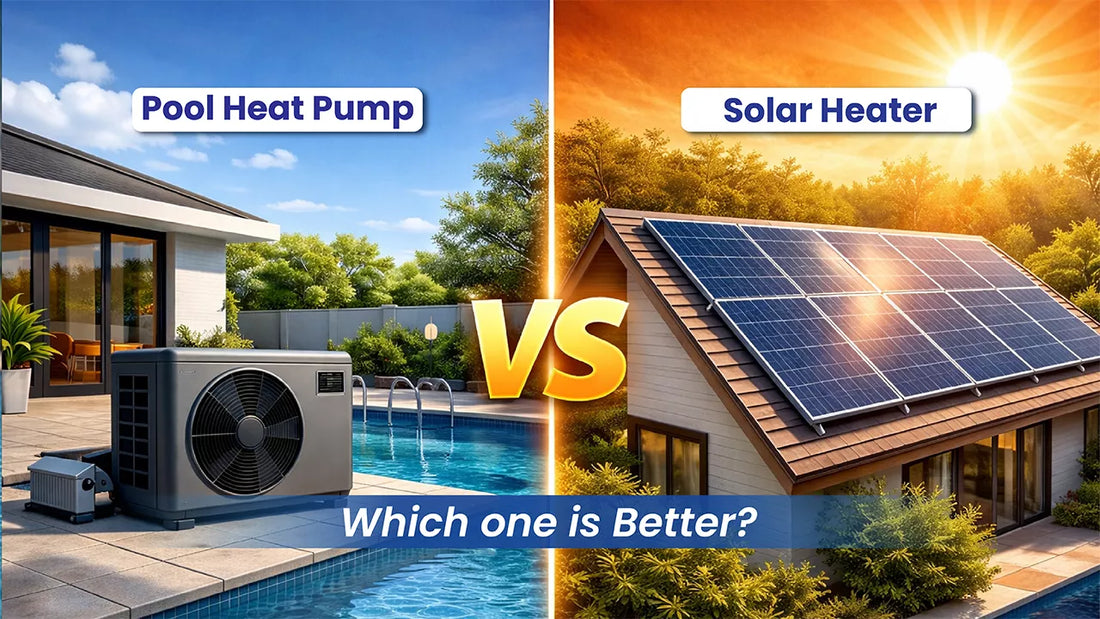
When you’re exploring ways to heat your pool, you’ll likely encounter two main options: a pool heat pump and a solar pool heater. Though they serve the same purpose, that is, keeping your pool warm and comfortable and maintaining your pool’s temperature, the difference between a pool heat pump and a solar heater boils down to how these devices operate and various other factors that dictate the choice of your pool heater.
In this blog, we’ll compare solar vs heat pump pool heating, including how they work, how efficient they are, their costs, and how to choose the right option based on your climate, budget, and swimming habits.
What Is the Difference Between a Pool Heat Pump and a Solar Heater?
Heat pumps rely on surrounding air temperature, using a fan to pull warmth from the ambient atmosphere, even on milder days. Instead of creating heat directly, the system uses a refrigerator and a compressor to capture the heat and move the water into the heat exchanger. Gradually, it transfers the warmth to the water and raises the pool’s temperature.
Solar heaters, unlike heat pumps, rely on a free energy source, that is, sunlight. A series of large solar collectors, installed on the rooftops or a nearby structure, absorbs the heat from the sun and helps these systems to function. When the water flows through these collectors, it picks up the heat and warms the pool.
So where do the differences show up? A heat pump is more energy-efficient and performs consistently across all weather conditions, but also comes with a higher operating cost. Solar heaters, in contrast, are environmentally friendly and a cost-effective solution. In the sections below, we’ll break down these differences in more detail to help you understand how each option performs in real-world conditions.
How Does a Pool Heat Pump Work?
Here is the suggested text you can insert:Pool heat pumps use a small amount of electricity to capture the natural warmth from the surrounding air and move it right into your pool water. Air source pool heat pumps do not create heat from scratch; instead, it moves heat from one place to another. To get a comprehensive overview of all your options, explore our full guide to pool heaters. Here’s a step-by-step explanation of how a pool heat pump works:
-
Step 1: A fan inside the unit traps the outside air and pushes it across the evaporator coil. Even on mild days, the air contains usable heat energy, giving the system plenty of free warmth to work with.
-
Step 2: The air flows through the evaporator coil, which is filled with a cold and special fluid called refrigerant. As warm air passes over the coil, the refrigerant absorbs that heat, turns it into gas, like a sponge soaking up sunshine, and begins to warm up the water.
-
Step 3: The warm gas travels into the compressor, which squeezes it tight, increasing the pressure and raising the temperature to over 200°F, without burning any fuel.
-
Step 4: While the pool pump sends cool pool water through the condenser coil, at the same time, the scorching-hot gas passes its heat right to the water (warming it 3-5 degrees per pass), and pool water gets circulated through the exchanger from the filtration system.
-
Step 5: The now-heated water flows back into the pool, slowly raising the overall water temperature. After the gas has given away its heat to your water, it cools back down, turns back into a liquid, and heads back to the start of the loop to do it all over again.
How Does a Solar Pool Heater Work?
Solar pool heating systems do not depend on electricity or fuel to heat the pool. Instead, these devices use sunlight, letting nature do the heavy lifting. Listed below are the steps that detail how solar heaters work:
-
Step 1: The water in the pool is pushed via the pump towards the filters, removing dirt & debris, and is then directed towards the collectors.
-
Step 2: The water travels through solar pool collectors, which are a network of small tubes (large, black mats made of heavy-duty rubber or plastic) installed on rooftops or close-by structures where they soak up maximum UV heat.
-
Step 3: As the sun shines on the collectors, the dark and black surfaces absorb and hold heat. This warmth transfers to the water flowing through the tubes. It's a free and simple energy transfer, requiring no fuel, electricity or moving parts.
-
Step 4: The pool’s heated water gathers into a single return pipe, where the gravity and the pressure from your pool pump send the warm water back into the pool with the help of return jets.
-
Step 5: As long as sunlight is available and water keeps circulating, the collectors continue to trap the solar heat and warm the pool.
Heating Performance: Which Heats a Pool Faster?
Among the solar vs heat pump heating speed comparison, the latter takes the lead as it heats the pool faster. Heat pump pool heaters function independently, which they warm the pool slowly but offer consistent performance, be it during nights or cloudy days. When the air temperature is warm and climatic conditions are favorable, these units can raise pool temperature by roughly 1–2°F per hour.
Solar heaters, in contrast, rely solely on sunlight, which affects their performance. On bright days with abundant sunshine, these devices can increase pool temperature by 3–5°F. However, on days with cloud cover, shorter daylight hours, shaded roofs, or cooler seasons, their performance may backfire.
Energy Efficiency Comparison
Heat pump efficiency COP (coefficient of performance) is the metric for pool heaters. A COP of 5.0 or 6.0 is considered favorable as it stands as the hallmark of an energy-efficient pool heater. Moreover, heat pump pool heater efficiency is also affected by ambient temperature, humidity, and costs. On warm, humid days, these devices work best, but during cooler evenings or nighttime operation, since there’s less heat in the air, their efficiency might drop.
The solar pool heater efficiency is determined by sunlight and UV intensity. The more direct sunlight received by the panels, the more heat these units can generate. Besides, factors like geographic location (sunny regions), roof orientation (south-facing roofs perform best in many regions), and shade from trees can also affect the performance.
The bottom line is, if efficiency is defined by energy consumption, solar heaters take the lead. They run on renewable energy and have no recurring operational costs. But if we add consistency to the metrics, then heat pumps stand out as winners as they offer reliable performance.
Operating Cost: Heat Pump vs Solar Heater
The difference becomes obvious when it comes to heat pump vs solar operating cost. The operating cost of a heat pool pump ranges between $50 to $150 per month. Though easily forecasted, the operating cost is recurring in nature and can also increase with higher electricity rates, colder air temperatures, larger pool sizes, or poor maintenance.
For a solar pool heating system comparison, this cost is zero, as the system taps into free energy sources. But these devices extract hidden costs from extra workload placed on your pool pump, limited sunlight hours, and clogged filters, which cause the pumps to run longer and harder to push water up to rooftop collectors. These systems also have potential for increased chemical degradation due to higher UV exposure in the panels.
Installation Cost Comparison
The average heat pump installation cost can amount to $4,000–$8,000 for a standard 15–25k gallon unit. The equipment costs around $2,500–$5,000, but the additional cost includes upgrades for electrical wiring ( $500–$1,500), plumbing routes ($500–$1,000), and labor ($1,000–$2,000).
In contrast, the equipment alone for a solar pool heater installation costs $3,000 to $7,000. But final installation prices spike up due to roof/ground mounting hardware ($500–$1,000), plumbing reroutes ($300–$800), labor ($1,000–$1,500), and seasonal maintenance setups that add $200–$400. In the end, the entire setup can cost $4,000-$10,000.
Maintenance Requirements
To extend the lifespan of your pool heaters, consider the maintenance requirements of each of these heaters:
Maintenance Requirements for Solar Pool Heaters
-
Dust, leaves, and bird droppings can block sunlight and reduce heating, so panels and solar collectors must be rinsed periodically.
-
Heat exposure and weather can loosen fittings over time, so occasional checks of roof-plumbing connections help to catch small leaks in early stages.
-
Check solar diverter valves and controllers, as these components direct water toward the solar collectors when heating is needed.
-
Watch for mineral buildup in collector tubes since hard water can cause calcium deposits.
-
Drain the system during the off-season if needed. In colder regions, solar systems must be drained before freezing temperatures arrive.
Maintenance Requirement for Heat Pool Pumps
-
Clear the airflow around the unit by keeping two to three feet of open space and removing debris like leaves and grass clippings.
-
Dirt buildup on the coils reduces heat transfer, so regular cleaning of evaporator coils is mandatory.
-
Inspect electrical connections and controls for loose wiring or corrosion because they help the compressor and fan to function.
-
Monitor for corrosion or refrigerant issues such as rust or component wear, like unusual noises, reduced heating, or visible corrosion.
-
Schedule an annual professional servicing to check refrigerant levels, electrical systems, and internal coils.
Climate Suitability: Which Works Best Where?
Heat pumps respond well to moderate or warm climates where air temperatures remain above 50–60°F. However, in regions with colder climates or nighttime, the system has to work harder to function, which decreases the heating speed and thereby increases the operational cost.
As the name suggests, the best pool heater for sunny climates is a solar heater. They work best in sunny regions with long daylight hours and minimal cloud cover. When installed on a south-facing roof with little shade, these units perform the best with no operational cost. But these devices are rendered useless during cloudy weather or shorter daylight periods.
Environmental Impact Comparison
Heat pool pumps leave a moderate environmental impact, as they use a small amount of electricity to run the compressor and fan. The impact of a carbon footprint pool heater depends on the local power grid, which is, in regions powered by coal or gas, might increase emissions. Though these units come with high COP, the refrigerants and mechanical components can still lead to electronic waste.
In contrast, solar heaters are eco-friendly pool heating solutions, producing zero emissions. Since they have no compressors or refrigerants and very few moving parts, they generate minimal waste and can last 20+ years.
Pros and Cons Summary Table
Here’s an overview of heat pool pump vs solar heaters pros and cons at a glance:
Which Pool Heater Is Better for You?
Pool owners who love to swim in comfortable, warm water throughout the year, irrespective of the weather, must opt for heat pool pumps. These units work best for regions sporting mild climates where the air stays above 50°F. In these regions, heat pool pumps can heat pools to 80–90°F with a high COP, cutting down the electricity costs. For those with shaded yards, larger pools, busy households, or frequent entertainers who need quick temperature spikes, heat pumps stand out as an ideal choice.
Solar heaters, on the other hand, are suited to sunny regions with 5–7 hours of daily sunlight. For seasonal swimmers or small-to-medium pools, these devices come with low operating costs, long-term savings, and minimal maintenance.
Final CTA Section
While both systems have their pros and cons, choosing the right provider can make all the difference to your swimming sessions. Whether you need quick temperature spikes, steady heating for large pools, or a solution suited for seasonal swimming, Varminpool offers energy-efficient pool heaters for every type. Explore our range today.
Frequently Asked Questions
Is solar pool heating cheaper than a heat pump?
When it comes to heat pump vs solar pool heater operating cost, the latter is cheaper because it relies on sunlight rather than electricity. Post-installation, solar heaters also have minimal running expenses aside from the pool pump; however, these devices are rendered ineffective during winters or nighttime, ultimately costing comfort.
Does a solar heater work in winter?
Yes, they can work in winter; however, their performance relies on sunlight availability and outdoor temperatures. However, in winter the days become shorter, and the sun sits lower in the sky, so there’s only a modest temperature bump (typically 4°C to 8°C above the ambient air). In colder northern climates, solar systems are usually drained for the winter to prevent freeze damage, while in tropical zones, they provide a pleasant, though not "steamy," swim year-round.
How long does a solar pool heater last?
One of the longest-lasting pool heating solutions, a solar pool heater has a lifespan of 15 to 20 years.
Can you combine solar and a heat pump?
Yes, many households opt for a hybrid setup. The solar heater provides free heating during sunny hours, while the heat pump maintains the temperature during cloudy days, cooler evenings, or extended swim seasons.
Which heater increases the pool value more?
There’s no clear winner as the value-driven benefits differ from person to person and their needs. Heat pumps are energy-efficient options suited for year-round swim sessions; however, solar heaters come with low-operating cost and long-term savings.